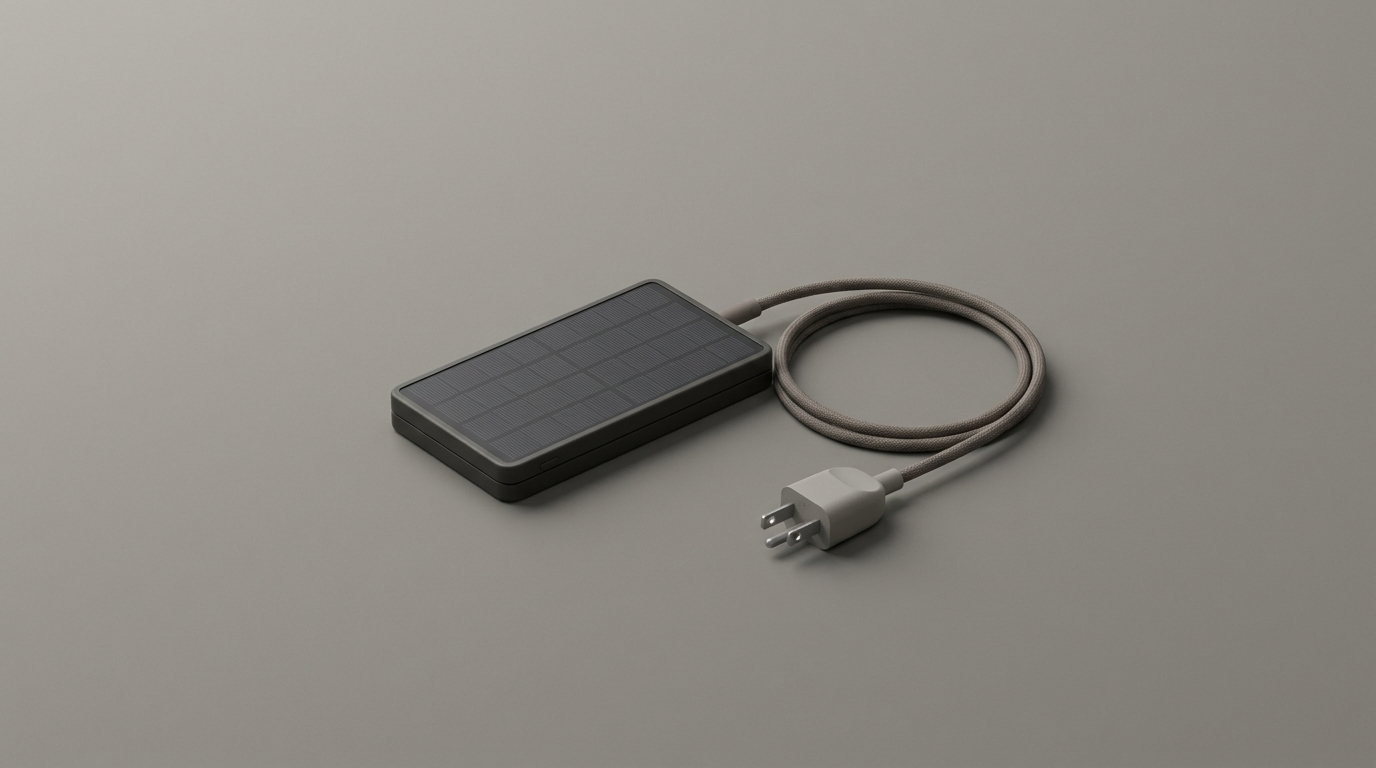
California just made it legal to plug a solar panel straight into a normal wall outlet. On Sept. 30, 2026, Gov. Gavin Newsom signed Senate Bill 868 (SB 868) [1]. This law lets people use “balcony solar” without a permit or a nod from the power company [2]. The new rules start Jan. 1, 2027. Renters and homeowners can then run up to 1,200 watts of safe panels per home [2]. That is enough power to run a fridge and a few small devices [4].
The big picture:
California just bypassed its broken rooftop solar market by backing the cheapest, easiest way to make home power.
The state recently slashed the cash it pays homes for extra solar power, which crushed the rooftop solar industry. At the same time, California has the highest home power rates in the lower 48 states. Costs are roughly double the U.S. average across its three big power companies [5]. I have been watching this shift, and what strikes me is how this helps new groups of people. It directly aids renters, condo owners, and anyone who cannot afford a full rooftop system.
This change worries the big power companies. Pacific Gas & Electric (PG&E) and San Diego Gas & Electric (SDG&E) fought the bill. They argued it pushes grid costs onto homes that do not have solar panels [3].
By the numbers
- 1,200 watts — Home limit: The most power a single home can run. The devices must pass tests by Underwriters Laboratories (UL) or a similar safety lab [2].
- $300 to $2,200 — Panel cost: The price range for plug-in kits on store shelves today. Buyers set these up themselves instead of hiring a pro [3].
- 35 states — Plug-in wave: The number of states that looked at plug-in solar laws in 2026. Utah passed the very first one in 2025 [2].
- 2030 — Sunset year: The year the permit pass ends unless state leaders extend it. Power companies backed this late change to the bill [2].
What I’d watch:
- Safety test race: Current store products do not yet meet California’s strict new safety rules. Because of this gap, buyers must still register them like normal rooftop solar. They must wait until fully tested models arrive to skip the paperwork [3].
- Early safety stamps: The Environmental Working Group (EWG) says at least two brands expect a UL-type safety stamp by late 2026. This fast track would put ready-to-use products on store shelves in early 2027 [4].
- Power company pushback: PG&E and SDG&E fought the bill hard over shifted costs. I am curious to see if they try to block the safety rules next [3].
- The sunset fight: Bright Saver’s Kevin Chou calls the 2030 repeal a “shadow” over the bill. He bets that so many people will buy these panels that leaders will not dare kill the law [2].
The catch
A plug-in panel will not keep the lights on during a blackout.
The law demands a safety shutoff, known as anti-islanding. This tool turns the panel off when the main power grid fails. It ensures the panel does not send stray power down the line and shock a repair worker [3]. Because of this strict rule, the panels only lower daytime bills and offer no backup power during an outage [3].
Supporters estimate the panels save up to 20% of a home’s power use. That equals roughly $500 a year for a small apartment [3]. My read is that this acts as a pure cost-cutting tool rather than a safety net. It is built to shave a high bill, not to ride out a storm.
At a glance
- The Big Shift: California made it legal to plug balcony solar panels into a normal wall outlet without a permit or utility check, allowing up to 1,200 watts per home [1][2].
- Why It Matters: The law opens home solar to renters and condo owners for the first time in a state with the highest power costs in the nation [5].
- What I’d Watch:
- Tested models: Whether UL-certified systems hit shelves by spring 2027, since today’s goods do not meet the new rule [3].
- The 2030 sunset: Whether state leaders renew the no-permit rule or let it die [2].
- Utility pushback: Whether PG&E and SDG&E keep fighting the cost-shift issues they brought up during the debate [3].
- The Catch: Plug-in panels have a safety shutoff (anti-islanding) during blackouts, meaning they only lower daytime bills and offer no outage backup [3].
Related reading
- California FAIR Plan Premiums Jump 29.1% Oct 15 — more on Energy & Efficiency
- Emporia Vue: How to Cut Energy Bills — more on Smart Home & Security
- Moss Landing Burns Again — more on Energy & Efficiency
Sources
[1] https://www.gov.ca.gov/2026/09/30/governor-newsom-issues-legislative-update-9-30-2026/ [2] https://pv-magazine-usa.com/2026/10/01/newsom-signs-california-plug-in-solar-bill-establishing-the-nations-largest-balcony-solar-market [3] https://www.kqed.org/science/2002120/california-officially-legalizes-balcony-solar-opening-the-market-to-the-new-technology [4] https://www.latimes.com/environment/story/2026-09-30/want-solar-but-dont-own-roof-california-just-legalized-plug-in-panels-no-permission-required [5] https://www.canarymedia.com/articles/virtual-power-plants/newsom-yes-to-virtual-power-plants