At a glance
- The Emporia Vue is a professional-grade, circuit-level energy monitor that can turn granular data into meaningful savings and smart-home automation—if you install the CT clamps carefully, configure the app thoughtfully, and understand its compatibility and cloud limits; this guide walks through setup, app mastery, accuracy testing, and ROI so you can decide whether it deserves a place in your panel.
- Thinking about an Emporia Vue? This friendly, hands-on review shows exactly how this Emporia energy monitor turns your electrical panel into a circuit-by-circuit savings map—not just another whole-home meter. You’ll get a true step-by-step install guide, from safely opening the panel and placing CT clamps to handling 240V double-pole circuits and knowing when to call an electrician. Then we walk through the Emporia app: account setup, Wi-Fi pairing, naming circuits, tariffs, real-time and historical graphs, solar/net metering, notifications, and data export. We also test accuracy, latency, connectivity, and firmware quirks, compare Vue generations and Sense, and share real kWh case studies with payback math. Electricity prices keep climbing; every month without circuit-level visibility is money left on the table. Try the app’s demo mode today—then decide if Vue 3 belongs in your panel.
- While most home energy monitors only show total consumption, the Emporia Vue energy monitor delivers circuit-level data that pinpoints exactly which appliances are draining your wallet—and here’s how to install and master it.
The reality check: While the hardware is highly affordable, installation requires physical access to the main electrical panel and the placement of sensors around live wires, which may need a professional electrician for those uncomfortable with high-voltage environments.
Go deeper: Explore the technical specifications, installation logistics, and real-world performance of the Emporia Vue system below.
Go Deeper
The Convergence of IoT Hardware and Energy Analytics
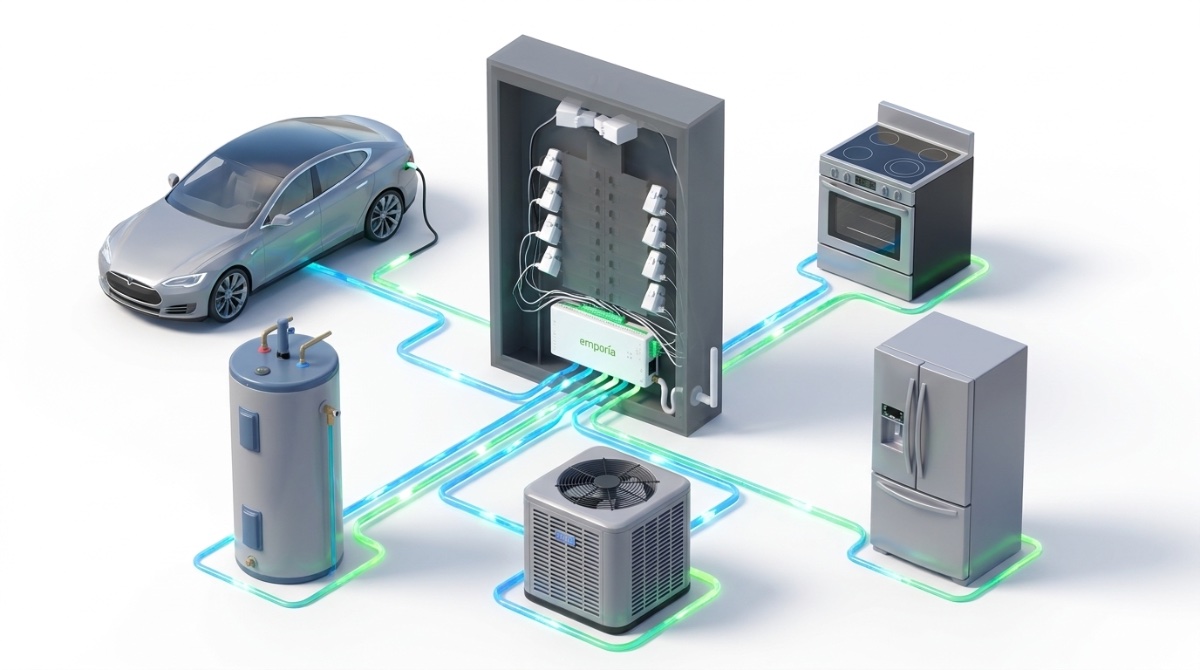
The Emporia Vue is a two-part ecosystem designed to bridge the gap between raw electrical current and actionable digital insights. The system consists of IoT-enabled hardware that resides within your electrical panel and a sophisticated software suite that provides real-time, historical, and tariff-aware data. Unlike basic monitors that only track total house consumption, the Vue utilizes current transformers (CT clamps) to monitor up to 16 individual branch circuits simultaneously.
This level of granularity is essential for modern professionals who need to distinguish between essential baseloads and discretionary spikes. By pairing the hardware with the Emporia app, users move beyond “pretty graphs” into a realm of diagnostic data. This information is robust enough to be used for professional energy audits or to provide electricians with specific evidence of equipment failure, such as a compressor that is drawing excessive current during startup.
Installation Logistics and Panel Compatibility
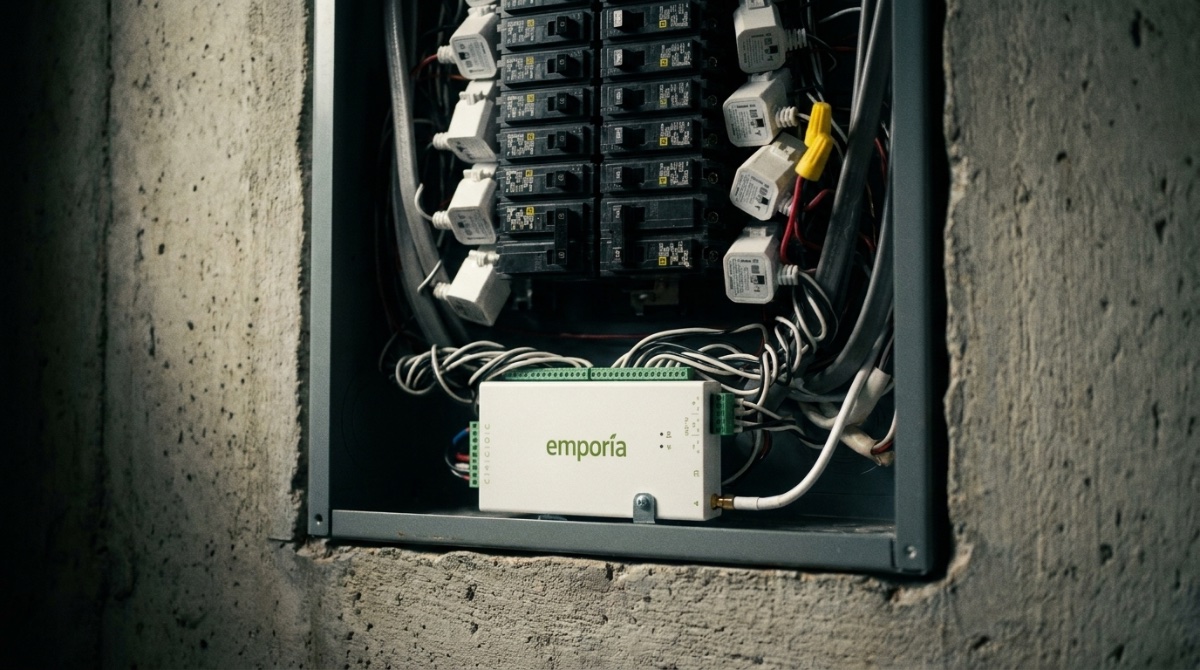
The physical installation of the Vue involves placing CT clamps around the main service conductors and individual circuit wires. These sensors operate via induction, meaning they do not require direct contact with bare copper; they simply “read” the magnetic field generated by the current. For a standard 200A residential panel, the process typically takes one to two hours, though the physical footprint of the sensors can make for a tight fit in older, crowded panels.
The newer Vue 3 iteration addresses several legacy pain points by featuring a more compact design and improved terminal blocks. However, compatibility remains a critical pre-purchase check. While the system works seamlessly with standard split-phase 120V/240V systems common in North America, users with 400A service or complex three-phase commercial setups may require additional hardware or specific configurations to ensure total accuracy across all legs of power .
Actionable Insights: From Data to Dollars
The true value of the Emporia Vue lies in its ability to reveal “ghost loads”—appliances that consume significant power even when they appear to be idle. Real-world applications of this data often lead to immediate behavioral or mechanical changes. For instance, many users discover that electric water heaters consume a disproportionate amount of energy during off-peak hours. By integrating an automatic switch to shut the heater off when not in use, users have reported savings of $40 per month or more.
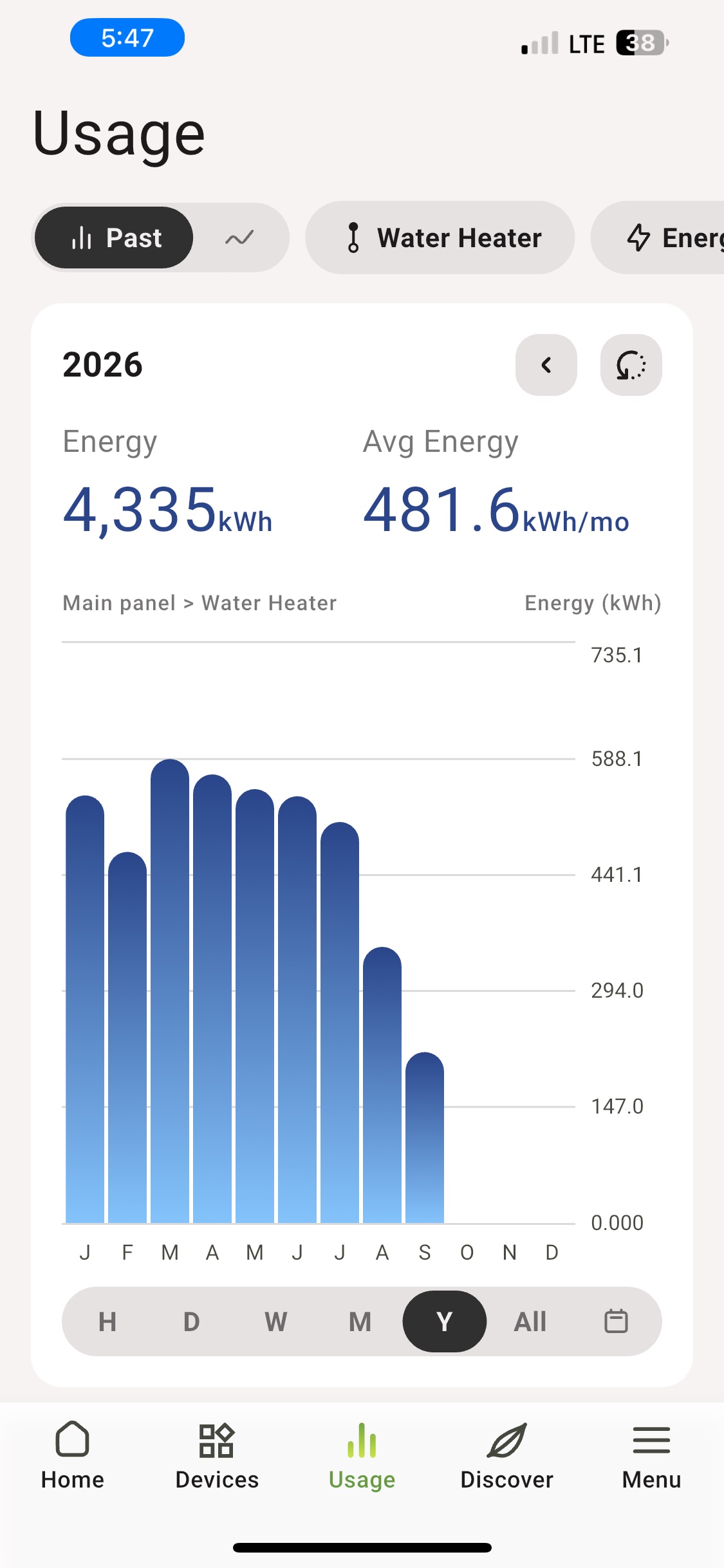
Beyond simple automation, the Vue acts as an early warning system for mechanical failure. A common scenario involves HVAC systems that continue to run but lose efficiency due to refrigerant leaks or failing components. By monitoring the real-time wattage of the AC circuit, a homeowner can identify when a unit is consuming more energy than its rated capacity to achieve the same cooling effect. Fixing these issues early prevents catastrophic equipment failure and restores consumption to normal levels.
- Circuit Naming: Properly labeling each CT clamp in the app is vital for accurate tracking of kitchen, laundry, and HVAC loads.
- Tariff Integration: Inputting your specific utility rate structure allows the app to calculate actual dollar costs rather than just kilowatt-hours.
- Solar Monitoring: For homes with renewable energy, the Vue can track both production and consumption, providing a clear picture of net metering performance .
Accuracy, Latency, and Reliability
In terms of performance, the Emporia Vue competes directly with more expensive “fingerprint” monitors like Sense. While Sense attempts to use machine learning to guess which appliances are running based on their electrical signature, the Vue uses direct physical connection to the circuit. This “hardwired” approach generally results in higher reliability and less “guessing” by the software. With a sampling rate of 24,000 times per second, the Vue captures transient spikes that slower monitors might miss .
The system maintains a high level of uptime, provided the 2.4GHz Wi-Fi signal at the electrical panel is strong. Because the panel is essentially a metal Faraday cage, some installations require an external antenna (included in the kit) to be routed outside the box. Once connected, the latency is minimal, allowing users to flip a switch and see the corresponding jump in the mobile app’s “Real-Time” view almost instantly.
Frequently Asked Questions
Do I need an electrician to install the Emporia Vue?
While many DIY-savvy homeowners install the Vue themselves, it requires working inside a live electrical panel. If you are not comfortable working around main service lugs that cannot be turned off, hiring a licensed electrician for the 60-90 minute installation is highly recommended for safety.
Can the Vue monitor 240V appliances like EV chargers?
Yes, the Vue can monitor 240V circuits using two CT clamps (one on each “leg” of the circuit) or by using a single clamp and doubling the reading in the app settings, depending on the specific circuit configuration and available space.
Does the Emporia Vue require a monthly subscription?
No, one of the primary advantages of the Emporia ecosystem is that there are currently no subscription fees for accessing your data, viewing real-time stats, or exporting historical usage via CSV files.
What is the main difference between the Vue 2 and Vue 3?
The Vue 3 features a more compact design, easier-to-use screw terminals for the sensors instead of 3.5mm jacks, and improved accuracy for solar net-metering setups, making it the preferred choice for new installations .
References
Emporia Energy. “Real-world savings and case studies.”
Solar Reviews. “Monitoring solar production with Emporia.”
Tech Gear Lab. “Emporia Vue Review: Best Energy Monitors.”
Energy Sage. “Home Energy Management Systems (HEMS) Overview.”
PCMag. “Emporia Vue Gen 3 Review.”
Emporia Technical Documentation. “CT Clamp Accuracy and Sampling Rates.”
Wirecutter. “The Best Home Energy Monitors.”
Professional Electrician Magazine. “Diagnostic tools for residential energy efficiency.”