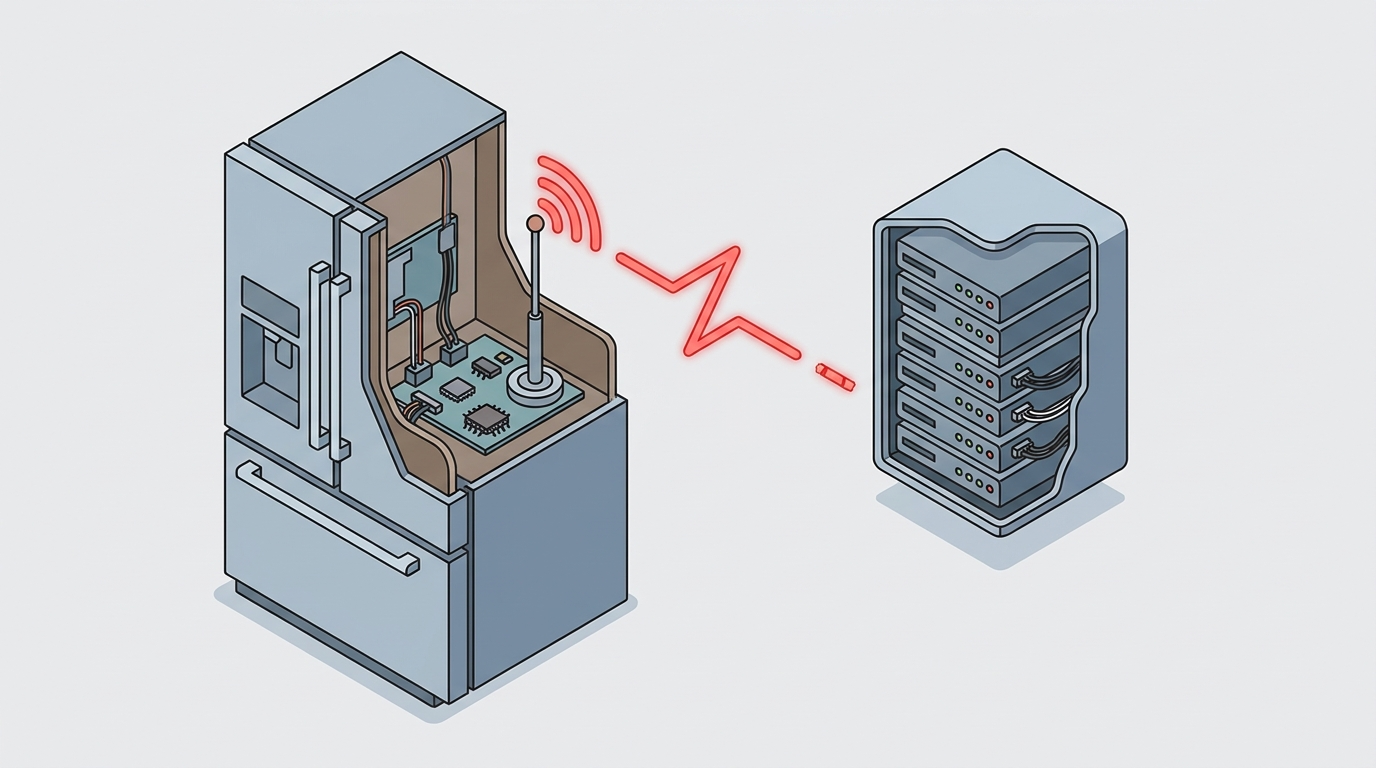
A software patch sent through the Samsung SmartThings network broke fridges on Sept. 22. The machines lost power right after the new code applied, forcing owners to toss spoiled food [1]. Ten days later, the top local smart-home platform, Home Assistant, announced it is renaming its cloud service because “Big Tech has given the cloud a bad name” [2].
The big picture:
What strikes me here is the timing of these two events.
A remote patch broke the one kitchen machine a house simply cannot lose, right before a major food holiday [1]. Then, the most trusted local-first platform chose that exact moment to drop the word “cloud” [2].
Samsung blamed an error during internal testing for a software patch [1]. The company noted the problem was limited to Korea [1]. That is the maker’s way of calming buyers down, but it highlights the core issue.
The fridge worked perfectly until a remote server sent it new code. The machine turned into a giant paperweight over a network link the owner never asked to rely on. There was no local backup, and the owner had no way to skip the new version.
By the numbers
- Sept. 22 — Samsung software brick: A SmartThings patch stopped Bespoke Artificial Intelligence (AI) fridges right after the new code applied [1].
- Hundreds — Spoiled food cases: A Korean news outlet counted hundreds of dead units right before a major harvest holiday [1].
- Dec. 2026.12 — Rebrand ships: Home Assistant Cloud officially becomes “Home Assistant Link” to describe what the service actually does [2].
- $2,000 to $30,000 — Panel upgrade cost: Battery-backed stoves skip the heavy electrical upgrades that normal electric stoves need [3].
What I’d watch:
My read: the people closest to this market are changing which home features should depend on a remote server. The founder of Home Assistant has told buyers not to buy products that require the cloud to work [2]. That makes selling a service with the word “cloud” in the name very hard to defend.
- The “optional cloud” split: Home Assistant Link is strictly optional, meaning the smart home still works fine without it. The system keeps data locked with a local key that only the homeowner holds [2].
- The remote patch question: Samsung’s testing excuse does not explain how the company will stop the exact same mistake next time [1]. I’d want to know whether a fridge should accept remote code changes in the first place.
- The battery-as-buffer trend: Startups are putting batteries inside electric stoves so they can run on a normal wall plug. This skips a huge electrical panel upgrade, showing the local-first idea moving into heavy kitchen hardware [3].
The catch
I could be wrong to read too much into a simple rebrand.
A name change is just marketing, and a local-first platform still runs some code on a server for remote access, voice typing, and backups [2]. That is exactly why the rename to “Link” ships in December rather than today [2].
The Samsung failure was also a single vendor’s mistake confined to Korea [1]. Most smart machines will keep getting new software for years without breaking down.
The honest limitation is that neither event proves cloud-tied homes are doomed. Together, they just make the local-first argument much harder to dismiss, and the “cloud” label much harder to trust.
At a glance
- The Big Shift: A Samsung software patch broke fridges on Sept. 22, and Home Assistant is renaming its cloud service to “Link” because Big Tech ruined the word.
- Why It Matters: The one machine a home cannot lose died over a remote link with no local backup, which is the exact failure local-first platforms have warned about for years.
- What I’d Watch:
- Optional cloud: Whether more vendors make the cloud optional so the house keeps working when the server stops.
- Patch control: Whether makers give owners a real choice before a remote patch changes how a device runs.
- Battery-backed hardware: Whether the same local-first logic spreads from software into stoves, panels, and other heavy gear.
- The Catch: A rebrand is marketing, and one local event is not proof the cloud always fails, but together they make “cloud” a harder label to trust.
Related reading
- Emporia Vue: How to Cut Energy Bills — more on Smart Home & Security
- Smart Home Security
Sources
[1] Ars Technica — “Owners mourn spoiled food after firmware update bricks Samsung smart fridges” — https://arstechnica.com/gadgets/2026/09/owners-mourn-spoiled-food-after-firmware-update-bricks-samsung-smart-fridges/ [2] Home Assistant Blog — “Big Tech ruined the cloud, so we’re renaming ours” — https://www.home-assistant.io/blog/2026/10/02/big-tech-ruined-the-cloud-so-were-renaming-ours/ [3] Canary Media — “Can this new induction stove help fuel the transition to clean cooking?” — https://www.canarymedia.com/articles/electrification/new-induction-stove-clean-cooking