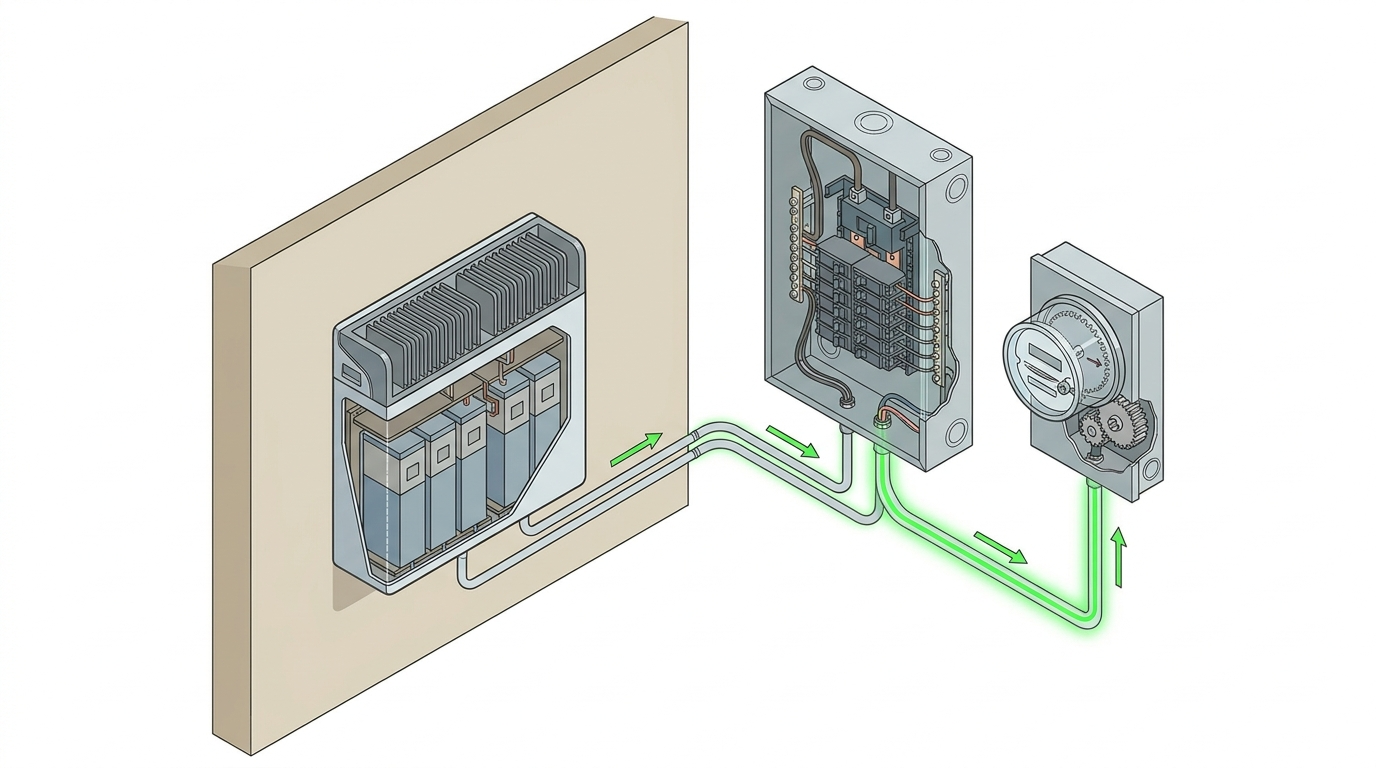
The average Home Equity Line of Credit (HELOC) just hit 8.194% [1]. That same week, California signed two bills to pay homeowners when their batteries send power to a stressed grid [3]. Two trends now point in opposite ways for anyone spending home repair cash.
The big picture:
Home loans cost more now than they have in years.
The 30-year fixed mortgage hit 7.30%, its highest mark since November 2023. Refinance requests dropped 9% in a single week [2].
I have been watching the rate side all week, but the quieter number is the HELOC. At 8.194%, a funded remodel must clear an 8% hurdle just to break even [1].
Meanwhile, home values are falling behind inflation. The Federal Housing Finance Agency (FHFA) index rose 2.6% over the past year. The S&P (Standard & Poor’s) Case-Shiller index grew 1.9%, lagging roughly 3.4% inflation [4].
A kitchen upgrade that used to pay for itself no longer does. The house itself is barely gaining value in real terms.
Then there is the other side. On Sept. 30, Governor Gavin Newsom signed Senate Bill (SB) 913 and SB 905 [3]. These laws let home batteries and smart appliances help the grid during peak hours [3].
SB 913 tells the California Public Utilities Commission (CPUC) to set a cash value for batteries that share power [3]. This lets them qualify for Resource Adequacy (RA) — meaning they get counted and paid for the power they share [3].
By the numbers
- 8.194% — Average HELOC rate: The national average home loan rate hit this mark on Oct. 1, with 10-year loans at 8.164% and 15-year loans at 8.503% [1].
- 7.30% — 30-year fixed mortgage: The highest rate since November 2023, driving refinance requests down 56% from a year ago [2].
- 300,000 — California home batteries: The number of users with solar-charged batteries, growing by 2,000 a week, who can now get paid for power [3].
- 2.6% — FHFA home price gain: The yearly growth rate, sitting below 3.4% inflation, meaning homes are losing real value [4].
What I’d watch:
What the people closest to this are doing:
- Enrolling California batteries: More than 300,000 users have solar-charged batteries, and 2,000 more join each week [3]. This fleet now points toward RA payments, making it the largest in the country [3].
- Positioning for 2027 rules: SB 913 gives the CPUC until June 30, 2027, to write the payout rules [3]. Companies that group home batteries into Virtual Power Plants (VPPs) are watching how the next governor shapes these rules [3].
- Shifting to adjustable rates: Adjustable-Rate Mortgages (ARMs) hit 10.3% of loan requests, their highest share since October 2025 [2]. Buyers want a cheaper early rate to dodge the 7.30% fixed option [2].
The part I keep circling: The choice here is not simply “remodel or battery.” It is whether a dollar borrowed at 8% for a house losing real value makes sense compared to a cash-funded asset that earns money from the grid.
The catch
I could be wrong about how fast this shift happens. SB 913 is a signed bill, not a written check [3]. The actual cash values, tracking rules, and signup steps all get decided by the next CPUC team [3].
A battery only earns money if those rules are written to pay it. A homeowner outside California gets none of this cash today. The VPP math here is strictly limited to California for now.
Paying down an 8% HELOC is also a locked, tax-free 8% return in a way no battery cash stream is. The honest story is not that batteries always beat remodels. It is that the math has tightened, making it much harder to defend taking a loan for a purely visual change.
At a glance
- The Big Shift: Home loans jumped to near three-year highs in the same week California signed bills letting home batteries get paid for sharing power [1, 3]. Borrowing to fix a house got more costly exactly as one home asset gained a way to make money.
- Why It Matters: With home price growth sitting below inflation, a remodel funded at 8% no longer reliably earns back its cost when sold [1, 4]. The extra home repair dollar is moving away from borrowed, non-earning changes toward cash-funded assets that earn from the grid.
- What I’d Watch: Whether California’s next set of utility regulators writes payout rules that make the battery math work.
- CPUC export rules: The rule process, due by June 30, 2027, that decides how much a home battery gets paid for power pushed to the grid [3].
- VPP groups: Companies grouping thousands of home batteries into one large power source that bids into the wholesale market.
- Borrowing costs: Whether the 8% HELOC rate holds or drops back to reopen the case for funded remodels [1].
- The Catch: The battery payouts depend on unwritten rules, and the cash is currently limited to California [3]. Paying down an 8% HELOC also offers a locked return that no battery income can promise.
Related reading
- Moss Landing Burns Again — more on Energy & Efficiency
- California FAIR Plan Premiums Jump 29.1% Oct 15 — more on Energy & Efficiency
- Swapping your gas furnace for a heat pump tax credit 2026 just… — more on Energy & Efficiency
Sources
[1] Fortune — “Today’s home equity loan and HELOC rates, Oct. 2, 2026” (Mortgage Research Center national averages) — https://fortune.com/article/home-equity-rates-10-02-2026 [2] Mortgage News Daily — “Higher Rates Sapped Mortgage Demand, Surprising No One” (Oct 2, 2026) — https://www.mortgagenewsdaily.com/news/10022026-mortgage-applications-mba [3] CALSSA — “Newsom Signs Virtual Power Plant Bills, Opening a New Front on Electricity Affordability” (Sept 30, 2026) — https://calssa.org/press-releases/2026/9/30/newsom-signs-virtual-power-plant-bills-opening-a-new-front-on-electricity-affordability [4] Mortgage News Daily — “Home Prices Keep Climbing, Just Not Everywhere” (Oct 2, 2026) — https://www.mortgagenewsdaily.com/news/10022026-case-shiller-fhfa-home-prices-prices-apprecia